
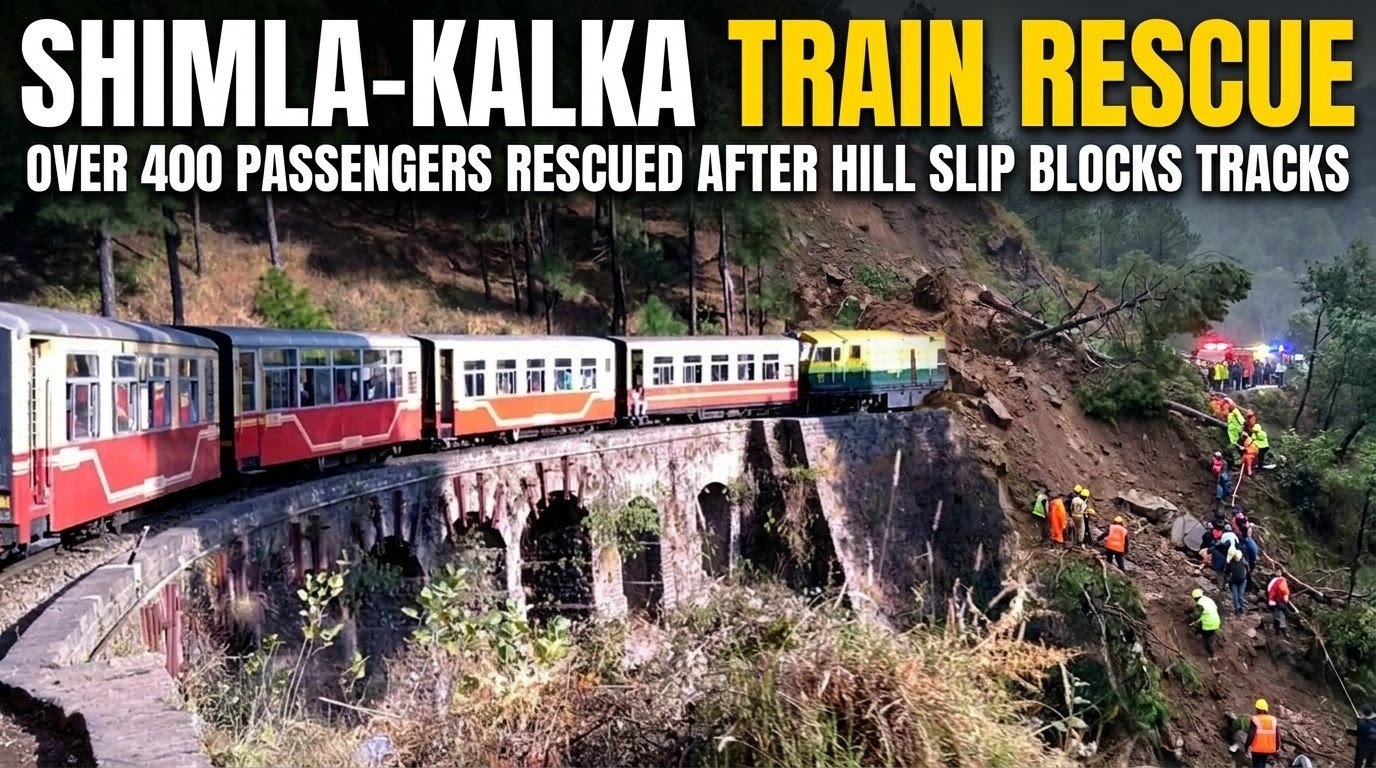
Shimla-Kalka Train Rescue: Over 400 Passengers Rescued After Hill Slip Blocks Tracks
Shimla-Kalka Train Rescue operations were successfully carried out after a hill slip blocked railway tracks along the historic Shimla-Kalka route, leaving more than 400 passengers stranded.
The incident led to the suspension of the iconic Shimla-Kalka toy train service as emergency response teams worked to ensure the safety of passengers affected by the track obstruction.
The Shimla-Kalka railway route is known for its scenic journey through the hills of Himachal Pradesh and is one of India’s most recognised heritage railway routes.
Shimla-Kalka Train Rescue Operation
The Shimla-Kalka Train Rescue operation began after a hill slip blocked the railway tracks, preventing the toy train service from continuing normally.
More than 400 passengers were reportedly stranded as the obstruction disrupted train movement along the route.
Emergency response teams were deployed to assist the passengers and ensure that everyone could be moved to safety.
The successful rescue operation brought relief to passengers and their families while railway authorities focused on assessing the condition of the affected track.
Hill Slip Blocks Historic Railway Track
Hill slips are a recurring challenge for transport infrastructure in mountainous regions, particularly during periods of heavy rainfall.
Loose soil, rocks and debris can move onto railway tracks, making sections of the route unsafe for trains.
In this incident, the hill slip created an obstruction that forced the suspension of the toy train service.
Railway authorities must inspect the affected section before allowing normal operations to resume.
Historic Shimla-Kalka Toy Train
The Shimla-Kalka railway is one of India’s most famous mountain railway routes.
The route connects Kalka with Shimla and passes through mountainous terrain, tunnels, bridges and picturesque landscapes.
The railway has significant historical and tourism value and is widely recognised as an important part of Himachal Pradesh’s heritage.
The toy train is particularly popular with tourists visiting Shimla and surrounding areas.
Over 400 Passengers Rescued
The rescue of more than 400 passengers was the most important outcome of the emergency response.
With the railway track blocked, passengers could not continue their journey by train.
Emergency teams worked to evacuate those stranded and move them towards safer locations.
The operation highlights the importance of rapid coordination between railway personnel and emergency response teams during incidents in difficult terrain.
Train Service Suspended for Safety
The suspension of the Shimla-Kalka toy train service was necessary following the track obstruction.
Railway operations in mountainous areas require careful safety checks because even a relatively small amount of debris can create risks for trains and passengers.
Before services can resume, authorities generally need to clear the obstruction and verify that the railway track and surrounding slopes are safe.
Passenger safety remains the primary consideration during such disruptions.
Challenges of Railway Operations in the Hills
The Shimla-Kalka route passes through challenging mountainous terrain.
Railway tracks in such areas can be vulnerable to landslides, hill slips and weather-related disruptions.
Maintaining the route requires regular monitoring, especially when rainfall increases the risk of soil movement and falling debris.
Emergency preparedness is therefore particularly important for railway services operating in the Himalayan region.
Importance for Tourism
The Shimla-Kalka toy train is more than a transport service.
It is an important tourism attraction and provides visitors with a distinctive way to travel between Kalka and Shimla.
Tourists often choose the route for its scenic views and heritage character.
Any prolonged disruption to the service can therefore affect travellers who have planned their journeys around the toy train experience.
Passenger Safety Takes Priority
Although the suspension caused inconvenience, ensuring passenger safety remains the most important priority.
Railway authorities cannot operate trains through sections where tracks may have been compromised by a hill slip or other geological movement.
The successful rescue of more than 400 passengers demonstrates the importance of emergency response mechanisms in such situations.
Restoration of Railway Services
The next priority after the rescue operation is the restoration of the affected railway section.
Authorities will need to assess the extent of the damage and determine what work is required to clear the tracks.
Depending on the condition of the route, restoration may involve removing soil and rocks, inspecting the railway infrastructure and securing vulnerable sections.
Normal services can resume only after safety checks are completed.
Broader Weather-Related Concerns
Weather-related disruptions remain a major challenge for transportation networks in mountainous parts of India.
Heavy rainfall can increase the likelihood of landslides and hill slips, affecting roads and railway lines.
Such incidents can also isolate passengers and communities if alternative transport routes are unavailable.
The Shimla-Kalka incident once again highlights the need for continuous monitoring and rapid emergency response in vulnerable areas.
Why Emergency Preparedness Matters
Quick response can make a major difference when transport disruptions occur in difficult terrain.
Emergency teams need to coordinate passenger evacuation, communication, transportation and safety assessments.
The rescue of more than 400 passengers shows how preparedness and coordinated action can help manage a potentially difficult situation.
Such response systems are particularly important for heritage railway routes that attract large numbers of tourists.
Shimla-Kalka Train Rescue: Key Takeaway
Shimla-Kalka Train Rescue operations successfully helped more than 400 passengers after a hill slip blocked the tracks of the historic toy train route.
The incident resulted in the suspension of the Shimla-Kalka toy train service and highlighted the challenges of operating railway infrastructure through mountainous terrain.
While the disruption caused inconvenience to passengers, the successful rescue operation ensured that those stranded were safely evacuated.
Railway authorities will need to assess and clear the affected section before normal train operations can resume. The incident also underlines the importance of weather monitoring, railway maintenance and emergency preparedness along vulnerable hill routes.
Frequently Asked Questions (FAQs)
1. What happened to the Shimla-Kalka toy train?
The Shimla-Kalka toy train service was suspended after a hill slip blocked the railway tracks.
2. How many passengers were stranded?
More than 400 passengers were reportedly stranded following the track obstruction.
3. Were the stranded passengers rescued?
Yes. Emergency response teams successfully rescued the stranded passengers.
4. Why was the train service suspended?
The service was suspended because the hill slip blocked the railway tracks and created a safety concern for train operations.
5. What is the Shimla-Kalka railway route known for?
The route is known for its historic toy train, scenic Himalayan landscapes, tunnels, bridges and tourism importance.
6. Is the Shimla-Kalka railway important for tourism?
Yes. The heritage railway is a popular attraction for tourists travelling between Kalka and Shimla.
7. What causes hill slips?
Hill slips can occur when soil, rocks and debris move down slopes, often due to heavy rainfall, unstable terrain or other environmental factors.
8. When will the toy train service resume?
Services can resume after authorities clear the obstruction and confirm that the affected railway section is safe.
9. Why are hill railways vulnerable to disruptions?
Mountain railways operate through steep and geologically challenging terrain, making them vulnerable to landslides, hill slips and extreme weather.
10. What was the main priority during the incident?
The primary priority was ensuring the safety and evacuation of the more than 400 passengers stranded by the track blockage.

