
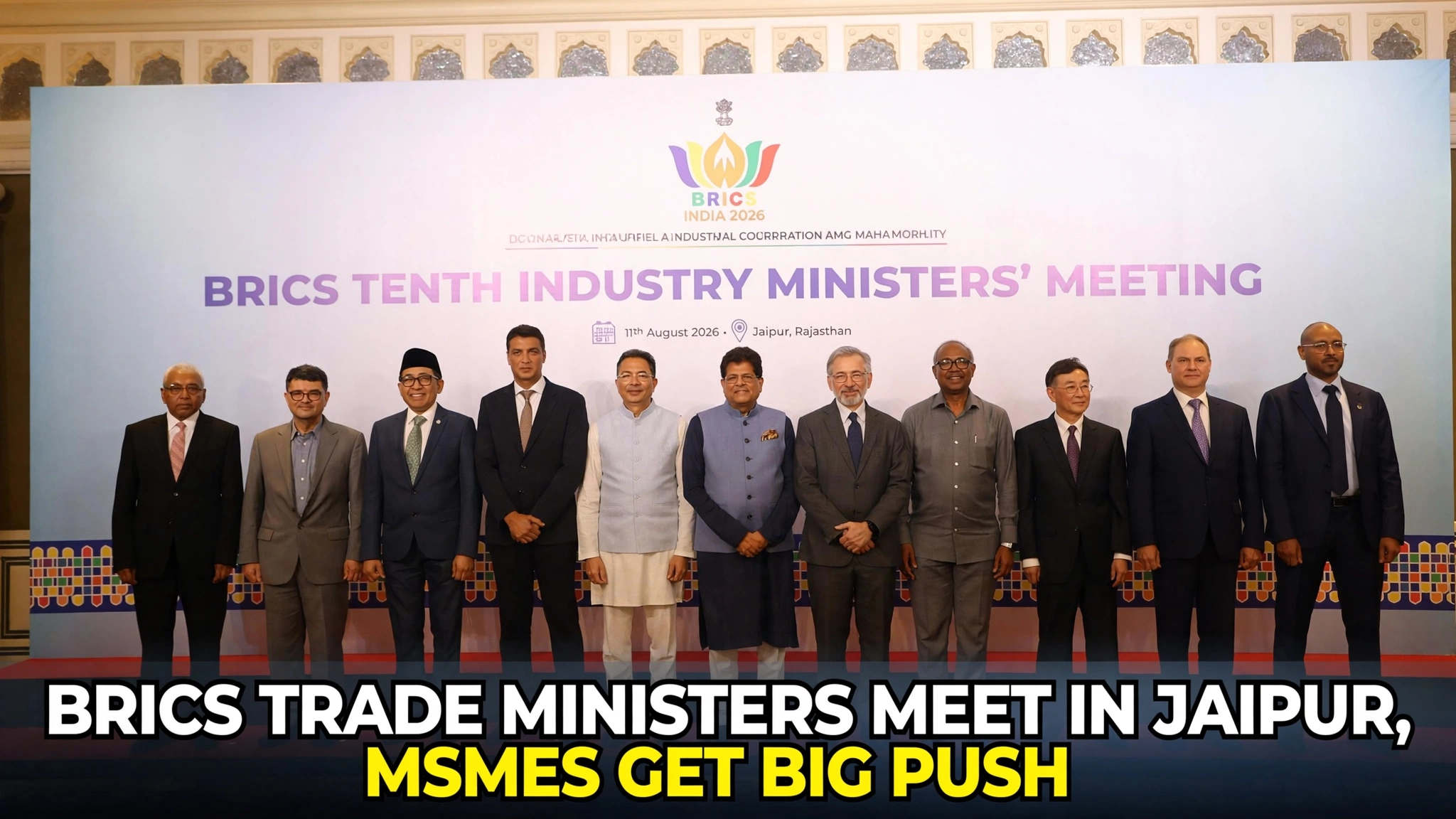
India hosted the 16th BRICS Trade Ministers’ Meeting in Jaipur, bringing trade and economic priorities into focus as the expanded BRICS grouping looks to deepen cooperation among emerging economies.
The meeting placed particular emphasis on three areas with direct implications for India’s domestic economy: protecting farmers, supporting women-led businesses, and improving credit assessment for export-oriented MSMEs.
The focus reflects a broader attempt to make international trade more inclusive while giving smaller businesses better access to global markets.
What Was Discussed at the BRICS Trade Ministers’ Meeting?
The Jaipur meeting focused on strengthening trade cooperation among BRICS countries while addressing challenges faced by smaller economic participants.
Three priorities stood out:
- Safeguarding farmers and agricultural interests
- Promoting women-led businesses
- Developing new credit assessment principles for export-oriented MSMEs
These areas matter because India’s export ambitions depend not only on large corporations, but also on thousands of smaller manufacturers, traders and service businesses.
Why Export-Oriented MSMEs Are Important
Micro, small and medium enterprises are a critical part of India’s economic and employment structure.
For many smaller exporters, however, access to affordable finance remains a major obstacle.
Traditional lending systems often rely heavily on historical financial statements, collateral and established credit histories.
That can create problems for younger businesses with strong orders but limited borrowing histories.
A more flexible credit assessment approach could allow lenders to evaluate exporters using additional indicators such as:
- Export orders
- Cash-flow patterns
- Payment records
- Digital transaction history
- Business performance
- International buyer relationships
The goal is simple: make credit assessment reflect the actual strength of an export business, rather than relying only on traditional collateral-based metrics.
New Credit Principles Could Help Smaller Exporters
Export businesses often need working capital before receiving payment from international buyers.
A manufacturer might receive a large overseas order but still need money to purchase raw materials, pay workers and ship the goods.
Without sufficient working capital, the business may be unable to accept the order.
Better credit assessment could therefore help viable MSMEs scale their exports faster.
This becomes particularly important as India seeks to diversify its export base and encourage more businesses to participate in international trade.
Farmers Remain Central to Trade Policy
Agriculture was another important focus of the meeting.
Trade agreements can create opportunities for farmers by opening new markets, but greater exposure to global competition also creates concerns around prices, livelihoods and market stability.
Protecting farmers while expanding agricultural exports therefore requires a careful balance.
India’s approach has traditionally emphasized food security and farmer interests alongside opportunities for international trade.
The BRICS discussions bring those concerns into a wider multilateral trade conversation.
Why Women-Led Businesses Got Attention
The focus on women-led enterprises reflects the growing recognition that women entrepreneurs can play a much larger role in international trade.
Access to finance remains one of the major barriers facing women-owned businesses.
Improving access to:
- Credit
- Export markets
- Digital platforms
- Business networks
- Trade information
could help more women-led companies move from local markets into international commerce.
For India, that could expand the country’s entrepreneurial base while creating new export opportunities.
Jaipur Meeting Highlights India’s BRICS Trade Role
Hosting the meeting in Jaipur gives India an opportunity to position itself as an active participant in shaping the trade agenda of the expanded BRICS grouping.
BRICS has grown significantly since its original formation, bringing together a larger group of emerging and developing economies.
The bloc represents a substantial share of the global population and economic activity, making trade cooperation increasingly relevant for Indian businesses.
For New Delhi, the objective is not simply increasing trade among BRICS members. It is also about creating mechanisms that make cross-border commerce easier for smaller businesses.
What This Could Mean for Indian Exporters
If the proposed credit principles translate into practical lending reforms, export-oriented MSMEs could benefit from improved access to working capital.
That could help businesses:
- Accept larger international orders
- Invest in production capacity
- Enter new markets
- Improve supply chains
- Hire additional workers
- Become more competitive globally
However, the impact will depend on how these principles are implemented by financial institutions.
A policy framework alone won’t solve the credit gap unless banks and lenders actually incorporate new data and assessment methods into their lending decisions.
BRICS Trade Cooperation Could Open New Markets
For Indian businesses, closer BRICS trade cooperation could create opportunities beyond traditional export destinations.
Emerging markets can provide demand for Indian:
- Pharmaceuticals
- Engineering goods
- Textiles
- Agricultural products
- Chemicals
- Technology services
- Consumer products
Reducing trade friction between BRICS economies could make it easier for smaller Indian businesses to explore these markets.
The Bigger Picture for India’s Export Strategy
The Jaipur meeting comes as India continues to push for stronger participation in global supply chains.
Large companies are important, but sustainable export growth requires thousands of smaller businesses to become globally competitive.
That makes the focus on MSME financing particularly significant.
If smaller exporters receive better access to capital, trade information and international markets, India’s export growth could become broader and more diversified.
Final Thoughts
The BRICS Trade Ministers’ Meeting in Jaipur placed smaller economic participants at the centre of a wider trade discussion. The focus on farmers, women-led businesses and export-oriented MSMEs shows that international trade policy is increasingly being linked with domestic economic inclusion.
For India, the most important outcome could be the push toward better credit assessment for exporters. If lenders begin looking beyond traditional collateral and historical financial records, thousands of viable MSMEs could gain the working capital they need to compete internationally.
The real test now is implementation. Turning these principles into practical financing and market-access opportunities will determine whether the Jaipur discussions translate into meaningful gains for India’s exporters.
FAQ
What was the BRICS Trade Ministers’ Meeting about?
The meeting focused on strengthening trade cooperation among BRICS countries, with discussions covering farmers, women-led businesses and export-oriented MSMEs.
Where was the 16th BRICS Trade Ministers’ Meeting held?
India hosted the meeting in Jaipur, Rajasthan.
Why is MSME credit important for exporters?
Exporters often need working capital to manufacture goods and fulfil overseas orders before receiving payment from international buyers.
How could new credit assessment principles help MSMEs?
They could encourage lenders to consider business performance, cash flows, export orders and other indicators alongside traditional collateral and credit history.
Why are women-led businesses part of the BRICS trade agenda?
Greater support for women entrepreneurs can expand access to finance and international markets while increasing women’s participation in global trade.

