
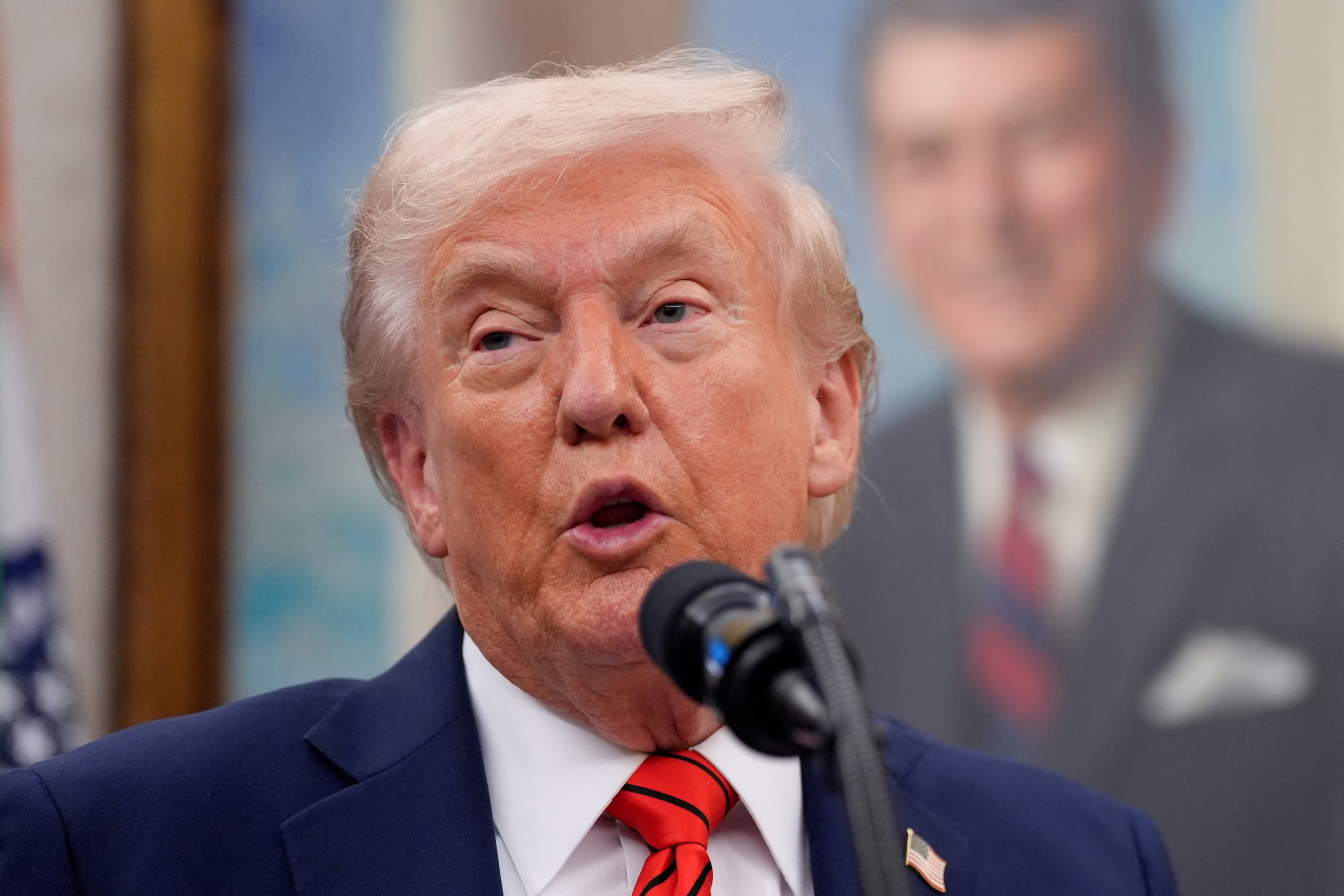
The second term of the Trump Presidency continues to keep the political landscape in the spotlight. On October 13, 2025, discussions around the ongoing government shutdown dominated the news cycle as negotiations between Republican and Democratic leaders reached a critical stage. Americans are paying close attention as federal workers, social programs, and economic stability face the impact of prolonged standoffs in Washington.
Let’s take a closer look at the latest updates surrounding President Trump’s decisions, the reasons behind the government closure, and how the White House is managing the crisis.
A Quick Overview of the Situation
By mid-October 2025, the United States entered one of its lengthier government shutdown periods since 2019. The shutdown began due to disagreements over spending legislation, border funding, and long-term budget reforms. President Trump has remained firm on his administration’s stance, emphasizing fiscal responsibility and national security priorities.
Many Americans have felt the effects firsthand:
Federal agencies have reduced operations.
Thousands of workers are on unpaid furlough.
National parks, research institutions, and immigration processing centers are operating with limited staff.
Despite these challenges, the administration has maintained that the shutdown is a necessary step to “restore budget discipline” and ensure that taxpayer money is spent effectively.
President Trump’s Latest Statements
During a press briefing on October 13, President Trump reiterated his commitment to protecting economic growth while pushing for stronger safety and border measures. He noted that negotiations with Congress were “productive but tough,” and that the government’s reopening would depend on reaching a fair deal aligned with the administration’s priorities.
The Trump Presidency continues to focus on three main points:
Fiscal Reform: Reducing wasteful government spending and re-evaluating outdated programs.
National Security: Enhancing border control systems and defense investments.
Economic Strength: Supporting American business competitiveness and maintaining job growth.
President Trump stated that “temporary discomfort will lead to long-term strength,” assuring the public that the administration is working swiftly to finalize agreements with Congressional leaders.
The Impact on Federal Services
The shutdown’s effects have rippled across multiple sectors. People are experiencing various disruptions in federal operations. Essential services—like air traffic control, border patrol, and medical facilities—remain active, but others are feeling the strain:
Social Security: Payments continue but customer service delays have increased.
Immigration: VISA and citizenship processing have slowed significantly.
National Parks: Many remain closed or partially operational.
Education Grants: Funding delays have affected several research projects.
Economists estimate that if the shutdown extends further into mid-October, the financial hit could surpass billions in lost productivity and delayed government contracts.
Public Opinion and Reactions
Across the country, opinions about the ongoing government shutdown vary. Supporters of the Trump Presidency argue that the President is taking a necessary stand against political overspending and inefficiency. They believe his persistence could create a stronger long-term structure for governance.
However, critics express concern about the human and economic cost of the deadlock. Many federal employees have turned to temporary work or savings as paychecks remain on hold. Political analysts note that as the situation continues, both sides of the aisle face increasing pressure to compromise.
Public polls released shortly before October 13, 2025, show a divided sentiment:
Around half of Americans blame Congress for the standoff.
A slightly smaller portion blames the White House for not showing flexibility.
Independent voters remain critical of both parties for failing to reach consensus.
Inside the Negotiation Process
Talks between Republican and Democratic negotiators resumed through the weekend leading up to October 13. Sources inside Capitol Hill reported progress in discussions related to emergency funding proposals.
The major sticking points remain:
Border infrastructure expansion.
Healthcare subsidy adjustments.
Federal tax cuts extension for middle-income households.
The White House has signaled openness to minor policy revisions but insists that core funding for national defense and border modernization cannot be compromised. Observers expect an updated draft bill to reach the Senate floor within the coming days if the current talks continue smoothly.
Economic Conditions Amid the Shutdown
Despite political turbulence, the U.S. economy remains relatively steady. The labor market has shown resilience with steady job growth, and inflation has started to cool after policymakers emphasized domestic production. However, business confidence indices suggest investors are cautiously monitoring the prolonged government shutdown and its potential effects on consumer demand.
Sectors like tourism, infrastructure, and education are experiencing mild disruption, while industries tied to federal contracts—especially technology and defense—anticipate delays in project approvals.
Financial experts predict that once the shutdown ends, the recovery period will depend on the scale of the interruption and the amount of backlogged government spending.
International Perspective
Foreign governments are also watching the developments closely. Allies in Europe and Asia have expressed confidence that the U.S. will soon resolve its internal budget disputes, but they remain cautious about any extended slowdown in American administrative functions.
President Trump’s team continues to reassure partners that the shutdown does not affect international commitments. The Trump Presidency has upheld trade discussions, military cooperation, and key diplomatic schedules without deviation.
What Americans Can Expect Next
As of the second week of October 2025, negotiations remain ongoing, with confidence growing that an interim funding measure could be approved within days. Once the budget bill is finalized, federal employees would receive back pay, and government programs would return to normal functioning.
If a new deal is reached:
Major agencies could reopen by the end of October.
Economic activity would gradually rebound in affected sectors.
Presidential approval ratings may improve as resolution efforts materialize.
The coming week will be crucial for both the administration and lawmakers, as an extended shutdown could lead to deeper fiscal challenges and declining public trust.
Conclusion
The latest updates on Trump’s Presidency and the government shutdown reveal a critical moment for American leadership. President Trump’s firm approach continues to define his second term, with a focus on fiscal control, border security, and economic growth.
While disagreements in Congress have halted normal government operations, discussions are progressing toward a temporary resolution. As the U.S. looks ahead to restoring stability, citizens remain hopeful that bipartisan cooperation will soon reopen doors across the nation.
In the end, the events of October 13, 2025, highlight a larger truth about American democracy—its debates, struggles, and resilience. History will remember how these choices shaped the nation’s political and economic path under the Trump administration.

