
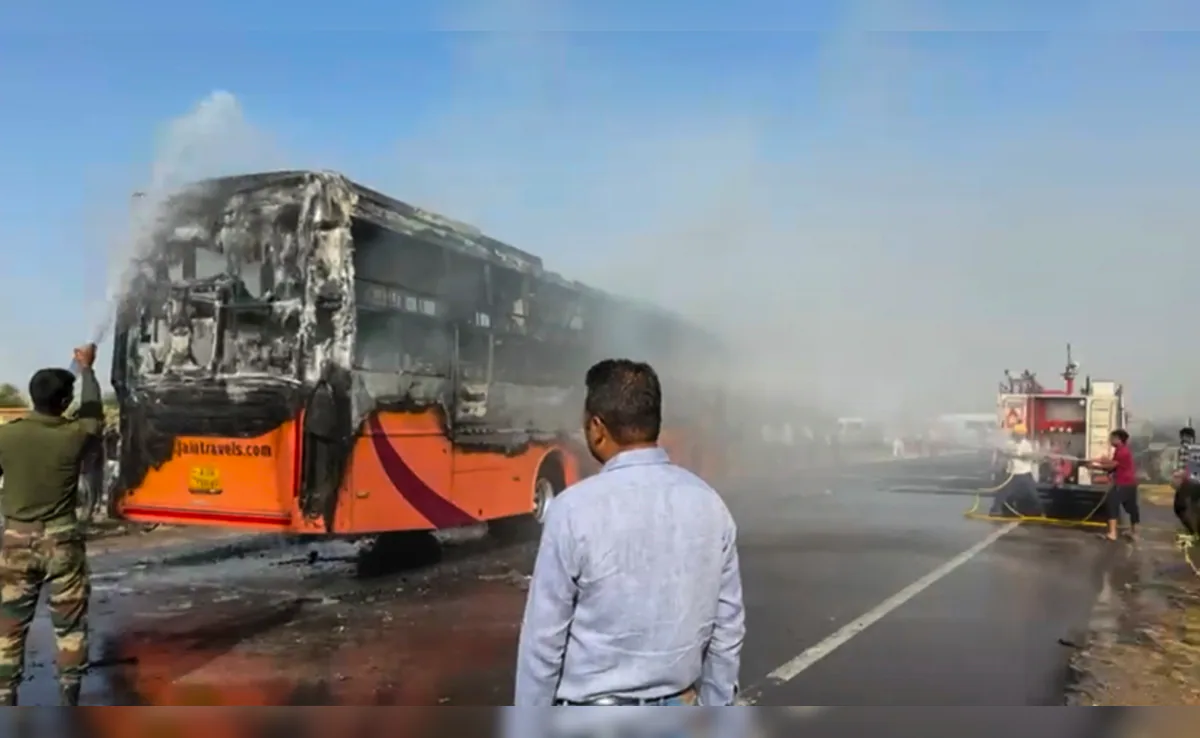
A devastating incident shook Rajasthan on October 14, 2025, when a private air-conditioned sleeper bus traveling from Jaisalmer to Jodhpur caught fire near Thaiyat village, claiming the lives of 21 passengers and leaving 15 others injured. The tragic Jaisalmer bus fire has sparked widespread grief across the nation and prompted swift government response, including financial aid announced by Prime Minister Narendra Modi to support the victims and their families.
What Happened in the Jaisalmer Bus Fire Incident?
The bus, carrying 57 passengers, caught fire due to a suspected short circuit in the air-conditioning system. The driver managed to stop the bus near a military station, but the flames spread rapidly. Unfortunately, the bus had only one emergency exit which became jammed, trapping many passengers inside. While some passengers escaped by breaking windows, others succumbed to the fire.
Local villagers, passersby, and personnel from the Indian Army’s 12th Rapid Division, along with police and firefighting teams, rushed to the scene to assist with rescue and medical aid. Despite their efforts, 21 people died, including some children, and many injured passengers were rushed to hospitals in Jodhpur for urgent treatment. The tragic incident exposed serious safety concerns, including violations of bus safety regulations as the vehicle was illegally modified from non-AC to AC.
Government Response and Compensation Announcements
Prime Minister Narendra Modi expressed deep sorrow over the loss of lives and extended his condolences to the affected families. The Central Government announced compensation measures to provide financial relief:
₹2 lakh compensation to the next of kin of each deceased victim from the Prime Minister’s National Relief Fund (PMNRF)
₹50,000 ex-gratia payment for each injured passenger
Additionally, Rajasthan Chief Minister Bhajan Lal Sharma announced an enhanced relief package, including:
₹25 lakh compensation for families losing three or more members
₹10 lakh per deceased victim
₹2 lakh for seriously injured persons
₹1 lakh for those with minor injuries
The state government also ordered a thorough probe and suspended officials responsible for approving the bus body modifications that violated safety norms.
Key Facts About the Incident
Bus departed from Jaisalmer for Jodhpur on October 14, 2025
Fire broke out near Thaiyat village, about 10 km from Jaisalmer
Cause likely a short circuit in the AC system
Single emergency exit on the bus became blocked
21 lives lost, including children, 15 injured with severe burns
Rescue efforts led by local villagers, Indian Army, police, and fire services
DNA testing underway to confirm victim identities
Why This Incident Matters
The Jaisalmer bus fire highlights critical issues regarding passenger safety and vehicle regulations. It calls attention to the urgent need for stricter enforcement of safety standards in commercial transportation, especially concerning emergency exits and vehicle modifications.
This tragedy has triggered a review of private bus safety standards in Rajasthan, aiming to prevent such disasters through better regulation and inspections. Public awareness about vehicle safety and emergency preparedness has also gained renewed focus.
How You Can Help or Stay Informed
Families of missing passengers are urged to contact district administration helplines issued by Jodhpur and Jaisalmer authorities.
Citizens can support by spreading awareness of bus safety and encouraging compliance with safety regulations.
Media outlets continue to provide updates on rescue operations, investigations, and government relief measures.
Conclusion
The Jaisalmer bus fire is a heartbreaking reminder of the importance of vehicle safety and emergency readiness. The government’s swift announcement of ₹2 lakh compensation from PM Modi for victims’ families and special aid for the injured provides some solace in this dark hour. Yet, this tragedy underscores the ongoing challenge of ensuring safe public transport and preventing future loss of life. Collective efforts from government, transport authorities, and the public are essential to uphold safety standards and protect citizens on the roads.

