
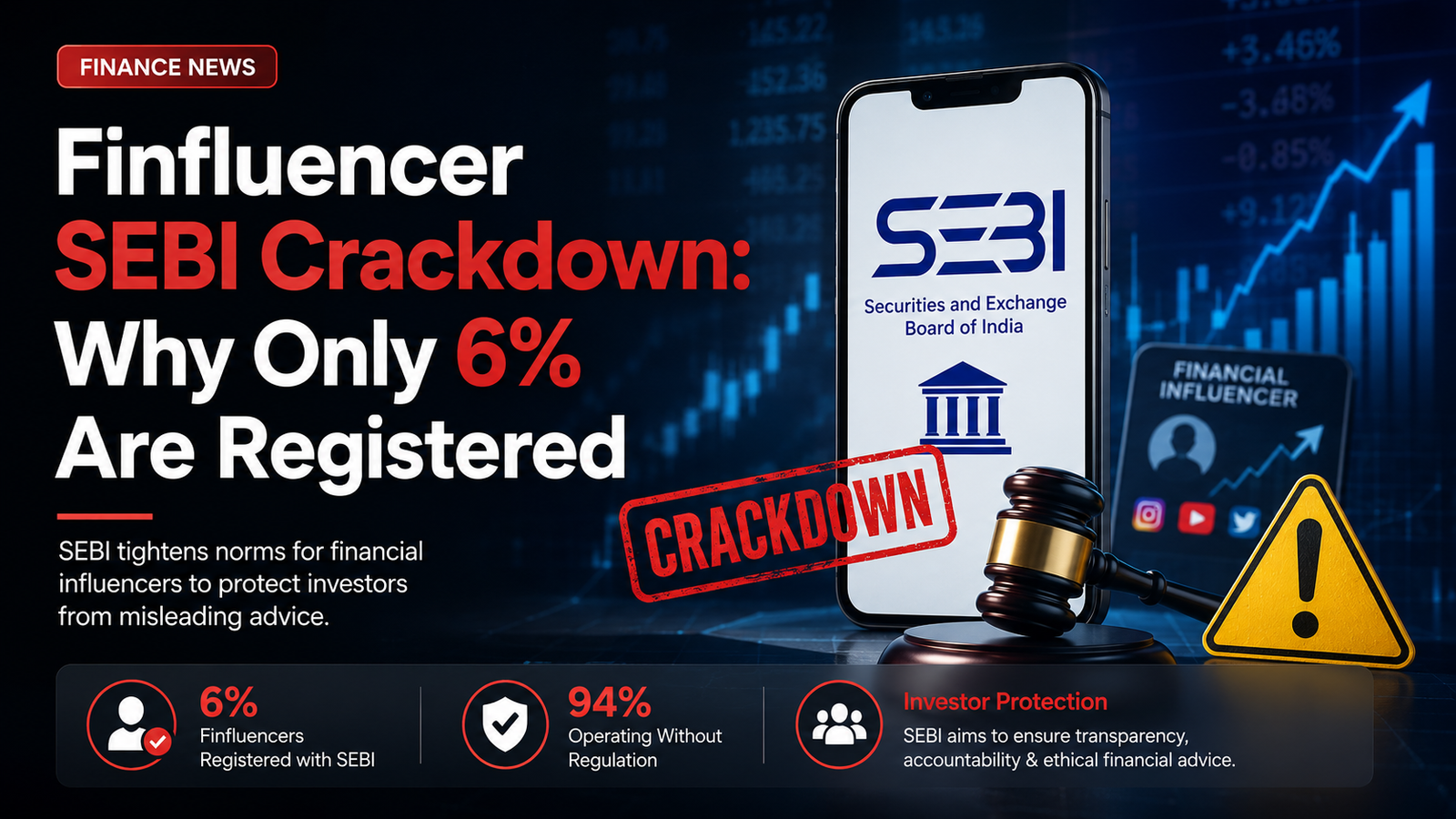
India’s retail investing boom has created a new breed of market influencers known as finfluencers. From YouTube and Instagram to Telegram and X, thousands of creators share stock market tips, mutual fund recommendations, and trading strategies with millions of followers. But there’s a major concern. A recent report suggests that only around 6% of financial influencers are registered with SEBI, raising serious questions about investor protection and regulatory enforcement.
Despite SEBI introducing stricter advertising and endorsement guidelines over the past few years, the vast majority of finfluencers continue to operate without registration. This has sparked a debate over whether the current regulatory framework is strong enough to deal with financial advice in the age of social media.
Who Is a Finfluencer?
A finfluencer is a content creator who discusses financial topics online. Their content may include:
- Stock recommendations
- Trading strategies
- Mutual fund reviews
- Personal finance tips
- Cryptocurrency discussions
- Market analysis
Some creators focus on financial education, while others go a step further by suggesting specific stocks or promising high returns. This is where regulatory concerns begin.
Why Is SEBI Concerned?
Under SEBI regulations, anyone providing personalized investment advice or portfolio management services generally needs to be registered with the regulator. Financial education is permitted, but recommending specific securities or encouraging followers to buy or sell investments without proper authorization may violate regulatory norms.
The challenge is that many finfluencers blur the line between education and investment advice. A video titled “Top 5 Stocks to Buy Today” may appear educational, but many viewers treat it as a recommendation.
Why Has SEBI’s Crackdown Had Limited Success?
Although SEBI has taken action against several high-profile cases and tightened rules around advertisements and partnerships, enforcement remains difficult.
The Scale Is Massive
Thousands of finance-related accounts are active across multiple platforms. Monitoring every YouTube channel, Instagram Reel, Telegram group, WhatsApp community, or X account is practically impossible.
Advice Is Often Disguised
Many creators avoid direct recommendations by using phrases such as:
- “This is not investment advice.”
- “For educational purposes only.”
- “Do your own research.”
However, the actual content may strongly encourage viewers to buy or sell particular stocks.
Social Media Moves Faster Than Regulation
A viral video can reach millions of people within hours. Regulatory investigations, on the other hand, often take weeks or months, allowing misleading content to spread long before action is taken.
Cross-Platform Operations
Many finfluencers operate across multiple platforms and redirect followers to private Telegram or WhatsApp groups where paid stock tips are shared, making enforcement even more complex.
Risks Retail Investors Face
The biggest risk is that many investors mistake popularity for expertise.
Pump-and-Dump Schemes
Some individuals may promote low-volume stocks to create buying interest. As prices rise, those holding the shares may exit their positions, leaving retail investors with losses.
Hidden Conflicts of Interest
A creator may receive payment from a company or market participant without clearly disclosing the commercial relationship.
Unrealistic Return Claims
Promises such as “Double your money in one month” or “Guaranteed multibagger” are red flags. No legitimate investment can guarantee stock market returns.
Lack of Accountability
Registered investment advisers must comply with regulatory standards and can face disciplinary action for misconduct. Unregistered finfluencers often operate without the same level of accountability.
Why Do Investors Still Follow Unregistered Finfluencers?
Several factors explain their popularity.
- Free and easily accessible content.
- Simple explanations compared to technical research reports.
- Fear of missing out on the “next multibagger.”
- Trust built through consistent social media engagement.
- Large follower counts that create an impression of credibility.
Unfortunately, follower count is not a substitute for qualifications or regulatory registration.
What Stronger Laws Could Look Like?
Experts have proposed several measures to strengthen investor protection.
Mandatory Registration
Creators regularly recommending specific securities for consideration could be required to obtain SEBI registration before publishing such content.
Stronger Disclosure Rules
Finfluencers should clearly disclose:
- Paid promotions
- Stock holdings
- Sponsorships
- Affiliate relationships
- Financial conflicts of interest
Higher Financial Penalties
Meaningful monetary penalties could discourage repeated violations and unauthorized advisory activities.
Platform Accountability
Social media companies could be required to remove content that violates financial regulations more quickly after receiving regulatory notices.
Faster Enforcement
Technology-driven monitoring using AI could help regulators identify misleading financial content before it reaches millions of users.
What Retail Investors Should Do
Before acting on any financial advice found online, investors should:
- Verify whether the person is registered with SEBI if they claim to provide investment advice.
- Be cautious of guaranteed return promises.
- Cross-check information with official company filings and exchange announcements.
- Avoid making investment decisions based solely on short videos or social media posts.
- Diversify investments instead of following a single stock tip.
A few extra minutes of research can prevent significant financial losses.
Is Regulation Alone Enough?
Probably not.
Effective regulation must be supported by greater financial literacy. Investors who understand basic concepts such as valuation, diversification, risk management, and asset allocation are less likely to fall for misleading recommendations.
Education and enforcement need to work together. One without the other leaves gaps that bad actors can exploit.
Final Thoughts
The fact that only around 6% of finfluencers are reportedly SEBI-registered highlights the challenges of regulating financial content in the digital era. Social media has made investing more accessible, but it has also increased the spread of unverified advice and speculative recommendations.
SEBI has introduced stricter rules and taken enforcement action in several cases, yet the rapid growth of online financial content means regulation alone cannot eliminate the problem. Stronger disclosure requirements, faster enforcement, greater platform cooperation, and improved financial literacy will all play an important role in protecting retail investors.
For investors, the safest approach remains the simplest: treat social media as a source of ideas, not investment advice, and always verify information before investing.
FAQ
What is a finfluencer?
A finfluencer is a social media creator who shares content related to investing, personal finance, stock markets, mutual funds, or other financial topics.
Do all finfluencers need SEBI registration?
No. Creators providing general financial education typically do not require registration. However, those offering regulated investment advice or research services may need to comply with SEBI’s applicable regulations.
Why is SEBI concerned about unregistered finfluencers?
Unregistered individuals may provide misleading investment recommendations without regulatory oversight, increasing the risk of financial losses for retail investors.
How can investors verify whether an adviser is SEBI-registered?
Investors can check the official SEBI website and relevant registration databases before relying on investment advice.
Should investors rely on stock tips from social media?
Social media can be useful for learning, but investment decisions should be based on independent research, official disclosures, and professional advice where appropriate.

